
The ethos of Auroville Education: a researcher’s perspective
by Neel Adhiraj Kumar | Auroville 2025
Condensed from “Auroville: Education for Evolution & the Evolution of Education”,
presented at the Global Forum 2025: Reimagining the Education of Humanity for the Third Millennium
At present, the world faces multiple interconnected crises: social, political, economic, ecological, cultural, psychological, and spiritual. This meta-crisis demands a transformation of our relationship with each other, the Earth and ourselves. Education can and must play a key role in this transformation.
Auroville, an intentional community in south India founded in 1968, offers a living experiment of this vision. It is an attempt to evolve a new way of being, from a new consciousness. As such, Auroville serves as a living laboratory for reimagining education to meet the challenges of the present and the needs of the future.
Through a year of work in Auroville schools, conversations with educators and alumni of Auroville schools, and a review of literature on education in Auroville, I sought to explore the curricula, learning environments, pedagogy and overall approach to education in Auroville, and understand what lessons this experiment has to teach us.
What do we mean by ‘Education’ in Auroville?
There is no homogenous monolith known as ‘Auroville Education’. There are – and have been – many different approaches to education in Auroville. There is enormous diversity, perhaps even contradiction in these approaches. The purpose here is not to try and generalise across these diverse approaches or find common elements. Rather, it is to draw lessons from as many of them as possible. Below are some key inspirations.
‘Integral’
Education in Auroville is seen as a lifelong journey of self-discovery and personal as well as collective evolution. Rather than simply transmitting specific bodies of knowledge, the emphasis is on cultivating mental, emotional, and physical capacities that can be applied across various fields, depending on each learner’s needs, interests, and context. Central to this approach is the focus on consciousness – becoming aware of one’s deepest self to find direction and purpose in life.
The guiding paradigm for this education is based on the works and teachings of Sri Aurobindo and the Mother, and known as Integral Education. It recognises “five principal activities of the human being”: the physical, vital, mental, psychic, and spiritual, and aims for a development of each part in harmony. The key is the connection to the psychic being – the evolving soul in each person. In Sri Aurobindo’s words:
“Every man has in him something divine, something his own, a chance of strength and perfection in however small a sphere, which God offers him to take or refuse. The task is to find it, develop it, use it. The chief aim of education should be to help the growing soul to draw out that in itself which is best and make it perfect for a noble use.”
In this paradigm, the external, instrumental parts of the being – the body, the vital (life force), and the mind – must be perfected to become capable servants of the guidance of the psychic being. For the body, this means a control and discipline of its functioning, and a methodical, harmonious development of all its parts and movements, leading to strength, agility, endurance and beauty. For the vital being, the seat of our enthusiasms, energy, effort and courage, this requires an awareness, control and transformation of the character, as well as a development and refinement of the senses, including the cultivation of an aesthetic sense. For the mind, it means developing its faculties, such as concentration, attention, expansion, widening, complexity, and thought-control, leading to a mental silence, calm and receptivity.
To put this into practice, school education in Auroville maintains an intentional balance of physical activities, creative arts, and academic studies.. Physical education extends beyond sports to include dance, martial arts, theatre, and Awareness Through the Body, a unique curriculum developed in Auroville. Students have many opportunities for artistic expression – drawing, painting, music, theatre, and crafts. These activities refine the aesthetic sense, build concentration, and channel vital energy into creativity, essential for building personality and developing imagination. A rich curriculum of physical education and arts together develops body and sensory awareness, a largely neglected domain within education. Academic subjects too are taught in integrated, interdisciplinary ways that connect to real experience rather than remaining abstract. The emphasis is on developing the faculties of the mind – perfecting the instrument that uses information, not merely accumulating information.
Integral Education extends beyond traditional academic subjects to encompass all dimensions of human development. Schools provide age-appropriate opportunities to learn about relationship and community building, health and human development, responsible parenting, dialogue, and self-expression through play, drama, music, and academics. Students have opportunities for travel, exploration, service, and mentoring – from community projects and individual explorations requiring student initiative, to camping trips and dramatic productions that offer transformative learning experiences in self-expression, interdisciplinary connections, and intergenerational relationships. This approach extends beyond school walls into the wider Auroville community, where all enterprises – from organic farms to surfing schools – become a learning laboratory, and work becomes an avenue for personal evolution and service to humanity.
What distinguishes the integral approach from other ‘holistic’ ones is the centrality of the psychic being, around which all else is organised and harmonised. Without a connection to the psychic being, we lack a true and deeper aim in life or a source of guidance on how to live – to what end to use our instruments. The psychic being provides that inner guidance – the meaning and purpose of our life on Earth, in service of which we can employ our instruments. This approach goes beyond just integrating ‘head, heart and hands’, and adds the neglected but critical spiritual component. The Mother emphasises the importance of this synthesis of both matter and Spirit:
“India has or rather had the knowledge of the Spirit, but she neglected matter and suffered for it.
The West has the knowledge of matter but rejected the Spirit and suffers badly for it.
An integral education which could, with some variations, be adapted to all the nations of the world, must bring back the legitimate authority of the Spirit over a matter fully developed and utilised.”
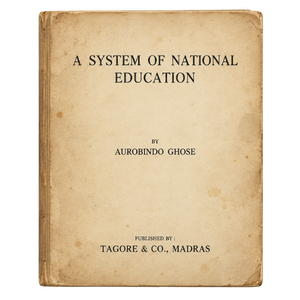
An essential part of Integral Education are the three principles of true teaching explained by Sri Aurobindo, briefly described here:
- “Nothing can be taught”: The role of education is not to fill empty vessels but to awaken what already exists within each child.
- “The mind must be consulted in its own growth”: Each learner’s unique developmental trajectory must be respected and supported.
- “From the near to the far”: Learning should begin with what is immediately alive and relevant for the learner, expanding outward to broader knowledge and skills.
The Aim of Education
In such an education, children are not learning merely to get degrees and certificates so they can find jobs and make money. Most schools in Auroville have no exams and do not give certificates (with some exceptions). Education is generally seen as a means of developing each one’s full potential, and giving each the freedom and opportunity to pursue their own individual path of growth and progress. As the Mother puts it, the true motivation behind education is:
“To learn for the sake of knowledge, to study in order to know the secrets of Nature and life, to educate oneself in order to grow in consciousness, to discipline oneself in order to become master of oneself, to overcome one’s weaknesses, incapacities and ignorance, to prepare oneself to advance in life towards a goal that is nobler and vaster, more generous and more true…”
The fundamental shift from education as knowledge transmission to education as the evolution of consciousness transforms both the purpose from career preparation to self-realization and the process from passive reception to active discovery.
Endless
Such an education does not end with adulthood – it is endless. In Auroville, education is not synonymous with schooling, it is conceived as an integral journey that continuously unfolds throughout one’s life. A key avenue for this is work, which in Auroville is also redefined, becoming inextricably intertwined with education. As per the ‘Dream’ and Charter of Auroville, work, instead of being the means to earn one’s living, becomes an avenue to develop one’s capacities and possibilities, while being of service to the community.
Each in their own way
Another essential aspect of this approach to education is that each being – child, adult, parent or teacher – is seen as unique. Thus, there is an attempt to give each person the freedom and opportunity to pursue their own path of growth and progress. This requires a redefinition of the role of the teacher and parent, beyond the prevailing didactic model. Sri Aurobindo writes:
“…each human being is a self-developing soul and the business of both parent and teacher is to enable and to help the child to educate himself, to develop his own intellectual, moral, aesthetic and practical capacities and to grow freely as an organic being, not to be kneaded and pressured into form like an inert plastic material.”
The founder of Auroville, the Mother, encapsulates this in the collective ideal of Auroville:
“Life itself, growing and perfecting itself, and above all not in the same way for everyone – each one in his own way”.
Community
Importantly, education in Auroville is a shared, communal endeavour. As the adage goes, “it takes a village to raise a child”. Education here is not limited by the boundaries of formal institutions, but encompasses the entire life of the community. The idea is for the whole city to be a vast campus of unending education and constant progress.
The Future
Though there is significant variance in approaches to education in Auroville, there is an overall understanding that prevailing, mainstream systems of education aim to reproduce a society that is currently in breakdown and Auroville must forge its own path. As one Aurovilian educator puts it, “the mission of Auroville education is not to produce ready-made citizens for a system that cannot anymore find solutions for the problems it has created; it is to help the emergence of men and women able to consciously build themselves on a true basis, while building a new world in which they chose to live together without exclusion and around common aims.” Auroville looks not just to the present but also, essentially, to the future. He further explains, “Auroville has to prepare the students to be ready for a world that doesn’t exist yet, to think out of preconceived ideas, and to face new challenges in a creative and cooperative manner, carried by the faith that a new world is possible”. In the words of the Mother:
“We are not here to do (only a little better) what the others do. We are here to do what the others cannot do because they do not have the idea that it can be done. We are here to open the way of the Future to children who belong to the Future. Anything else is not worth the trouble…”
The Practice of Education in Auroville
What does this new approach to education look like? How does it work? How is it implemented? Auroville’s educational landscape has several interconnected approaches that embody the community’s commitment to integral growth and progress. There is little that is universally and uniformly true across Auroville. However, we can highlight some themes that are representative and emblematic of education in Auroville.
A diversity of approaches
First and foremost is this recognition itself, that there should not and cannot be a one-size-fits-all approach to education. The oft-asked question of “What kind of education should we give our children?” is a misleading, trick question – there is no one right answer. In Auroville, each school and learning initiative is different, catering to different needs and preferences. There are free-progress models without mandated exams and certifications, as well as more structured schools with Indian or international certification. This allows for a tremendous degree of flexibility and choice for learners (or their parents), allowing each to choose what is right or suitable for them at whatever stage of their journey they are on.
Freedom, authenticity, & responsibility
The diversity of approaches is not just at the level of institutions, but also at the level of individuals. Perhaps one of the most obvious and distinctive features of children in Auroville is that they are free. They are allowed to be themselves, exercise and explore their natural curiosities and inclinations, run, play, talk and just be. They have the freedom to choose, to listen to themselves, to be children, take responsibility, and do what makes sense to them. Structures do exist – but they are emergent, flexible, and responsive rather than rigid and imposed. This is achieved through practices such as individual planning and reflection with all children – discussing what they want to work on for the week and how the previous week went, what they learned and what challenges they faced.
This freedom leads to an authenticity in education – what is being learned is relevant and alive for the learner. Children explore their passions, question freely, and discover through immersion. In general, children are allowed and encouraged to ask their own questions, find their own answers, and make their own mistakes. This approach not only leads to powerful independent thinking and problem-solving skills, but often results in students learning much more than what the facilitator could have intended or anticipated – and each learns what is needed for them and appropriate for their level. This creates an education that is relevant, contextual, and flexible, not rigid, disconnected, and abstract from children’s lived realities.
This freedom also cultivates a profound sense of responsibility. One alumnus explains, “My education in Auroville reached far beyond just the schools. I was given the freedom to grow as a person; was given responsibility in my own life. These things helped me learn from all my experiences… Growing up in Auroville prepared me more than just academically for the world”. It is clear that freedom here is not indulgence,it is taking responsibility for yourself and for the collective. Thus, it demands not less from learners, but more. Tools and practices such as individual learning charts, project work, portfolio reflection, and collective decision-making foster ownership and cultivate a sense of rhythm and self-organization.
Personalized learning & reflective practice
Moving away from the factory model of education that treats all children as if they have the same abilities, interests, and developmental needs, Auroville schools approach each child as a unique individual with their own learning journey. Teachers consistently observe that in this kind of learning environment, groupings form naturally based on interests or needs, creating an atmosphere that supports cooperation, collaboration, and genuine appreciation of diversity, as opposed to one of comparison and competition. Everyone becomes both teacher and learner, and collaborative learning emerges organically from shared curiosity and mutual support. The fact that children have different needs and interests at different times also becomes a doorway for an interdisciplinary learning.
Love & respect
Underlying this freedom and responsibility is a profound love and respect for children, which allows educators and parents to listen to them, trust them, and treat them as individual beings with their own autonomy, rights, perspectives, feelings and knowledge. This is founded on the basic principles of Integral Education, where every child is regarded as a conscious being possessing an inner wisdom, unique passions, intrinsic curiosity, and an essential love for learning.
A basic pre-requisite for this is teachers’ absolute commitment to creating fear-free learning environments. Children in Auroville are received as they are, including their anger, frustration, and confusion. Rather than being shamed or punished, these “difficult” emotions are held within a space of compassionate presence, care, and acceptance. The result of all this is nothing short of transformative: when children are loved, respected, trusted, feel safe, and allowed to follow their own inner guidance, they not only acquire more knowledge, they become more deeply themselves – confident, capable, and compassionate.
Learning by doing
One of the most significant departures from conventional education is Auroville’s emphasis on learning through doing and real experience. This approach addresses fundamental limitations in contemporary education systems that focus predominantly on cognitive development while neglecting the capacity for action and will-power. In contrast, in Auroville learning happens through practical engagement with real challenges and community needs making education relevant, contextual, and meaningful rather than abstract, theoretical, and disconnected from lived experience.
Students engage in experiential and project-based learning through activities like
cooking (which integrates mathematics, language, and cultural studies), growing food (combining ecology, biology, and sustainability), and building structures (interdisciplinary projects that merge physics, engineering, and design thinking). Children take responsibility for the complete cycle of their activities – for instance, cleaning up after cooking and eating – fostering both practical skills and personal accountability. This approach of starting with what is present and alive for an individual or collective embodies Sri Aurobindo’s third principle of true teaching: “to work from the near to the far, from that which is to that which shall be”.
This philosophy of learning by doing extends throughout all aspects of Auroville life, fundamentally redefining the relationship between work and education. Rather than viewing work merely as a means to earn a living, the Mother envisioned work as “a way to express oneself and to develop one’s capacities and possibilities while being of service to the community as a whole”. In this framework, whatever field of work one engages in becomes an opportunity for learning by doing, growing in both skills and consciousness. This integration creates a vibrant ecosystem where learning, working, and living become naturally unified rather than artificially separated.
Learning how to learn
Perhaps the most valuable skill developed through Auroville’s educational approach is what alumni consistently describe as “learning how to learn.” As one graduate explains, “I learned that every skill is learnable and so in life there is nothing I will not attempt as I believe I can do/learn anything, the freedom to do what I wish not only what I’ve been trained to do”. It is hard to overstate how powerful this is. One alumnus shares: “I passed every competitive exam I sat for and I think Auroville had a huge role to play. It gave me the freedom to learn unencumbered by the expectation of results”.
Learning how to learn
Auroville is characterized by its experimental nature and constant evolution. It is explicitly not a perfect model to be replicated, but rather a living laboratory where new approaches are continuously being tested and refined. This experimental ethos
permeates every aspect of life in Auroville, including education, creating space for genuine innovation and responsive learning. There is remarkable freedom for institutions, teachers, and students to experiment and adapt their approaches based on what emerges in the moment. As one teacher explains, “We teachers have such freedom. This freedom enables us to be practical and to be present in that moment”.
Educators
Often, what distinguishes the integral education approach is not “what” is done, but “how” it is done, with what attitude and consciousness. Teachers in Auroville understand that their presence, attitudes, ways of being, and relationships with students constitute a crucial part of the child’s educational experience. The right kind can nurture both freedom and responsibility, help learners discover, become, and be themselves, and create a model of healthy, mutually nourishing and supportive human relationships for children. Teachers in Auroville seek to understand not just how a child performs academically, but who they are as a developing human being. They strive to be role models of the qualities they seek to develop in students, positioning themselves as learners alongside their students.
This co-learning between teachers and students exemplifies the unending education that is so essential to Auroville. Students and teachers work together as partners on real projects – building something, solving community problems, or exploring artistic expression – dissolving the artificial separation between “those who know” and “those who learn”. Everyone becomes both teacher and learner, creating an authentic community of learners, beyond constraints of age, experience, and credentials.
The learning environment
As influential for a child’s education as the educator and the curriculum is the environment in which education happens. The atmosphere in Auroville schools reflects a profound awareness of the importance of the environment to learning. Every detail, from the design of physical spaces to the rhythm of daily activities, is carefully and consciously crafted to foster quietude, concentration and beauty. Moreover, children in Auroville experience a sense of safety that is not merely physical but emotional and spiritual; they feel confident expressing their authentic selves in atmospheres of love and gentleness.
The learning environment in Auroville extends beyond just the classroom and school, encompassing the entire life of the community. Schools, educators, parents and children make full use of Auroville’s resources – gardens, farms, parks, theatres, sports facilities, cultural events, local experts, and the constant stream of visitors from around the world. Moreover, the lived environmental consciousness of Auroville lets children naturally develop a keen understanding of nature, and a deep sense of respect, responsibility, love and care towards the larger ecosystem of which they are a part.
An inspiration and invitation
Auroville’s living experiment offers profound lessons, rooted in Sri Aurobindo and the Mother’s philosophy. Chief among them is that education must be an inner, comprehensive, and participatory process aimed at conscious evolution.
Moving beyond the reductive, compartmentalized models of the past, the Auroville model shows us that integral, community-based, lifelong learning is not only possible but essential to shaping a future where humanity’s highest aspirations can be fulfilled. As global and national education policies increasingly echo these values, Auroville’s half-century experience provides both inspiration and practical insights for this transformation.
Sri Aurobindo International Institute of Educational Research
What's in a name?
Sri Aurobindo
A Force in Action

International
Auroville and the World
Institute
From Near to Far

Education
Lifelong Learning
Research
Within and Without